Academic book publishing is the process of taking a scholarly manuscript, whether a monograph, an edited collection or a creative work grounded in research, through proposal, review, production and distribution. For independent researchers, students and early-career writers, the most important decision is not which famous imprint to approach but which route to take, because the route determines who pays, who can read the book and how long the process lasts. At Pyrrhic Press Publishing, an independent open-access publisher, we publish scholarly work with no submission or publication fees, and this guide explains why that matters when you compare the options.
TL;DR
- A scholarly book is written by a subject expert, cites its sources in a set style and aims to advance knowledge in a discipline. Peer review for books is less standardized than for journals.
- Most book contracts begin with a proposal: a summary, a chapter-by-chapter outline and an estimated length.
- Open-access books at conventional publishers often carry a book processing charge (BPC) of roughly €5,000 to more than €15,000, according to Open Access NL.
- Pyrrhic Press Publishing charges no submission or publication fees, with more than 1,115 published works and 150,000 documented downloads.
- Compare routes on cost, review quality, licensing, preservation and how readers will find the book.
Table of Contents
- What counts as an academic book
- How a book differs from a journal article
- The proposal: how most book projects begin
- Publishing routes at a glance
- What publishing can cost
- Choosing a publisher: seven checks
- Protecting your rights before you sign
- Our perspective
- Publish with Pyrrhic Press Publishing
- A practical sequence for first-time book authors
- FAQ
- Sources
What counts as an academic book
Before choosing a publisher, it helps to know what readers, librarians and hiring committees mean by the term. The University of Alberta library explains that scholarly books are typically written by academic experts, include references in a set citation style, and may be standalone titles, series, multi-volume works or edited collections, in print or as ebooks.
The University of Washington Libraries add a useful test: a scholarly book is written by a researcher in the discipline, cites original data or primary sources through footnotes or a bibliography, and aims to advance knowledge. A book without scholarly authority, a knowledge-advancing goal or cited sources does not qualify.
In practice this gives you a checklist for your own manuscript:
- Does it make an argument or contribution that other scholars can evaluate?
- Does it document its evidence, so a reader can trace every claim?
- Is it written in the formal register of the discipline?
- Has someone qualified examined it before publication?
That last point is where books differ from articles, and it is worth a closer look.
How a book differs from a journal article
An article is a short, self-contained report, usually judged by two or three anonymous reviewers after you submit the finished text. A book is a larger commitment, and the process is organized around that scale.
The first difference is timing. Book publishers generally decide on the basis of a proposal, sometimes with sample chapters, before the full manuscript exists. The second is review. Librarians at RRC Polytech note that peer review is a journal process not typically applied to books in the same way, although scholarly books, particularly from university presses, often go through a formal editorial process resembling it. The third is length: a monograph may run to tens of thousands of words, so the editing, indexing and production work is more demanding, and so is the question of who pays for it.
For you, this means two practical habits. Read a press's published editorial standards before you submit, and ask what kind of review your specific book will receive. A press that explains its screening, conflict-of-interest rules and reviewer process in writing has made that question easy to answer. Ours are set out on our peer review and editorial process and publishing policies pages.

The proposal: how most book projects begin
The Royal Geographical Society's guide explains that in most cases a book contract requires a proposal first, essentially a sales document. Most publishers ask for similar material: a summary, a detailed outline with a short paragraph per chapter, and an estimate of final length. Many impose strict maximum lengths.
A workable proposal answers five questions:
- What is the book about, and what is new in it? State the argument in a short paragraph, not a topic.
- Who will read it? Name the disciplines, courses or communities, and be realistic about the size of each.
- How is it organized? Give each chapter a title and a paragraph. Show that the chapters build on one another.
- How long will it be, and when can you deliver? Give a word count and a delivery date you can keep.
- Who are you? Describe your expertise and prior work. Independent researchers should say plainly how their methods and training qualify them.
Where many writers go wrong is submitting the same proposal to a dozen presses without checking each one's scope. Read what a press has published recently and write to its actual list.
Publishing routes at a glance
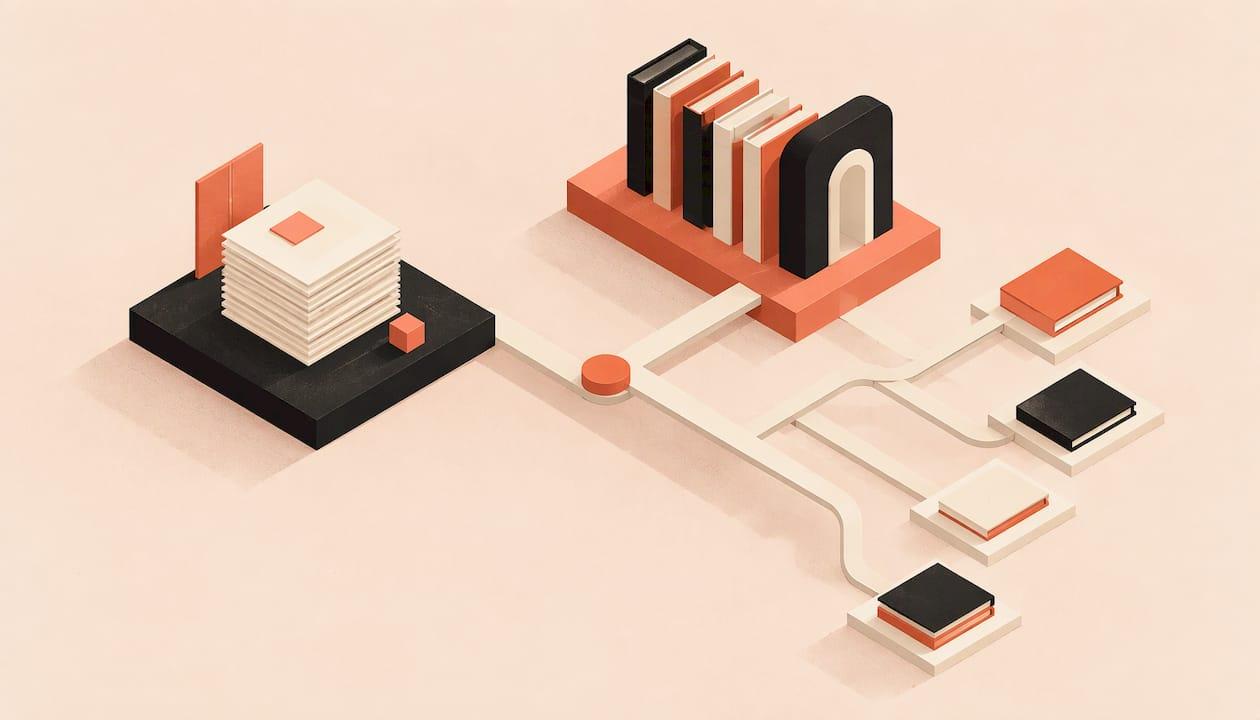
The OA Books Toolkit lists the main business models for open-access books: BPC, delayed BPC, freemium, institutional subsidy, library membership, library consortium crowdfunding, subscribe-to-open and crowdfunding. Put simply, someone has to cover the costs of editing, production and hosting, and each model decides who that someone is.
| Route | Who pays | What it means for an author |
|---|---|---|
| Traditional (closed) | Readers and libraries | Few readers outside subscribing institutions; contract terms vary |
| BPC open access | Author, funder or institution | A fee set by the publisher, often thousands of dollars or pounds |
| Delayed open access | Author or funder, at a discount | Book is open after an embargo |
| Institutional subsidy | The university | Usually limited to the institution's own staff |
| Library or consortium funding | Libraries collectively | Depends on the publisher being selected for a funding round |
| No-fee open access | Donors, grants and supporters | No charge to the author; the book is free to every reader |
If you are an independent researcher, a student or a writer without grant funding, the BPC route is usually closed to you, and institutional subsidy requires an institution. That leaves no-fee open access as the most direct path to a published, freely readable book.
What publishing can cost
Cost is the question readers ask most often. Open Access NL reports that BPCs range from €5,000 to more than €15,000 depending on the publisher and the length of the book. The University of Exeter gives a similar picture, stating that BPCs start at £5,000 and can reach £10,000 or more plus VAT, varying greatly between publishers.

Funders can help, but only those with grants. UKRI, the United Kingdom's national research funder, supports up to £10,000 including VAT for a monograph or edited-collection BPC and up to £1,000 for a chapter charge, and requires UKRI-funded long-form outputs published from 1 January 2024 to be open access within 12 months. The Bodleian Libraries stress that this money is not guaranteed until after publication, once eligibility has been confirmed, so authors should apply through their library before committing to any costs. Other funders vary: the University of Nottingham notes that Wellcome, AHRC, Leverhulme and the ERC each handle book costs differently, generally within a grant while the award is running.
These are mostly UK and European arrangements. If you work outside a funded institution, or your project was never part of a grant, none of them apply, and a fee of this size is a real barrier. Our companion guides on what authors pay and how to avoid it and how to reduce academic book costs go through the charges line by line.
Choosing a publisher: seven checks
Open Access NL recommends that authors compare publishers on several points, which we have condensed here and adapted for authors of any background:
- Funder or institutional requirements. Some funders accept publication after an embargo; others require immediate open access.
- Transparency about fees. If a charge exists, the publisher should explain the amount and how it was calculated. With no fee, you should see that stated plainly.
- Review quality. Look for a published description of editorial screening and, where it applies, peer review.
- File formats. Check which ebook formats are supported so the book works on the devices your readers use.
- Licensing. Open Access NL cautions that ND or NC Creative Commons licenses can restrict reuse and new editions. Choose terms that let your work travel.
- Timeline and embargoes. Ask how long production takes and whether the text is freely available at once.
- Preservation and dissemination. Look for long-term archiving and a plan for getting the book in front of readers.
Open Access NL also warns that discounts for delayed open access should be scrutinized, since publishers do not always explain how the discount relates to their revenue during the embargo. Reading a press's terms closely before signing is sensible with any publisher.
Production quality belongs on the list too. A book that is clearly laid out is easier to read, cite and trust, and the discipline behind it is well described in this piece on how layout makes publications work. When you evaluate a press, look at the finished pages of its recent books as well as its policies.
Protecting your rights before you sign
Whatever route you choose, read the contract for what you keep. The University of Exeter advises authors to discuss open-access options before signing and to include a Rights Retention statement in chapters at submission, so the accepted manuscript can be made open under a CC BY license. It also suggests checking a publisher's self-archiving policy, since chapters can often be deposited in a repository free of charge.
Three questions are worth asking of any agreement: Can you deposit a version of the work in a repository? Can you reuse your own figures and text in later work? What happens to the rights if the book goes out of print? Clear answers protect your future projects.
Our perspective
Authors come to us after learning that the usual open-access route assumes a grant, an institution or several thousand dollars. We built Pyrrhic Press Publishing on a different premise: scholarly and literary work deserves a readership whether or not its author has funding.
That is why we publish without submission or publication fees, and why our work is supported by donations, grants and institutional sponsorship instead of charges to authors. Our catalog of more than 1,115 published works and 150,000 documented downloads reflects what independent researchers, students and emerging voices can achieve when cost is not the gatekeeper.
We also think transparency should be measurable. Our 3PO Index offers a framework for evaluating how open and transparent academic publishing platforms are, and our free scholarly association connects authors with colleagues across borders and disciplines. Peer review, in our view, is a method for strengthening scholarship, and we describe our editorial standards publicly so authors know what to expect before they submit.
the author
Publish with Pyrrhic Press Publishing
If your manuscript is a scholarly study, a collection of poetry, a spoken-word piece or another creative work with a serious intellectual purpose, we invite you to see how our open-access program works. Authors pay no submission or publication fees, and readers pay nothing to download. Start on our open-access publishing page, where you can also learn about the Free Author Spotlight and the 3PO Index.

We publish journals as well as books, and our Author Spotlight gives authors a place to share their work with a wider audience. Our preservation, metadata and publication practices page explains how published work is kept discoverable.
A practical sequence for first-time book authors
Whatever route you take, the order of work matters.
- Define the contribution. Write a one-paragraph statement of what the book adds. If you cannot, the manuscript is not ready for a proposal.
- Draft the proposal and outline. Include chapter summaries, a realistic length and a delivery schedule.
- Match the press to the project. Read recent titles, the editorial standards and the licensing terms.
- Confirm the cost. Ask directly whether any fee applies and what it covers. With a no-fee press, confirm that the same is true for production and distribution.
- Submit and respond to review. Reviewers' comments are meant to strengthen the argument. Answer each point in writing, and explain where you revise and where you keep your position.
- Check proofs and metadata. Accurate titles, author names, abstracts and identifiers help readers find and cite the book.
- Share it. Post the announcement through your scholarly networks, department pages and social channels, and deposit a copy in a repository where your agreement permits.
FAQ
How do I get an academic book published?
Begin with a proposal containing a summary, a chapter outline and an estimated length, then send it to presses whose lists match your subject. The press reviews the proposal, may request sample chapters, and, if it accepts, moves to a contract, review of the manuscript and production. Read each press's editorial standards before you submit.
How much does it cost to publish an academic book?
It depends on the route. Open-access book processing charges at conventional publishers range from about €5,000 to more than €15,000, according to Open Access NL. Pyrrhic Press Publishing charges no submission or publication fees, so authors without grant funding can still publish.
What are the main kinds of academic publishers?
Scholarly books come from university presses, commercial scholarly publishers, trade publishers and independent or institution-run open-access presses. They differ in review practice, audience, licensing and cost, so compare them on those points rather than on name alone.
Does an academic book need peer review?
Not always in the way an article does, but scholarly books, especially from university presses, usually go through a formal editorial process. Ask any publisher how your manuscript will be evaluated, and look for a published description of the process.
Sources
- What is a scholarly book? (University of Alberta Library)
- Scholarly Books (University of Washington Libraries guide)
- Scholarly & Peer-reviewed Books (RRC Polytech Library)
- Publishing books (Royal Geographical Society)
- Business models for OA book publishing (OA Books Toolkit)
- Open Access Books (Open Access NL)
- Open access books (University of Exeter)
- Publish a book or book chapter open access (Bodleian Libraries)
- Open books and book chapters (University of Nottingham)
- How layout makes publications work
Recommended
- How to Reduce Academic Book Costs: A Practical Guide
- Academic Publishing Fees: What Authors Pay and How to Avoid Them
- How to Publish Poetry Collections: Routes, Costs and Rights
- Where Are You Headed? Get There. ISSUE 2 - The Ultimate Quick Reference Guide to Publishing Success: From Manuscript to Global Impact